Showing posts with label Lifestyle. Show all posts

Tuesday, September 8, 2015

Why living small means living happily ever after

Here are just 4 simple reasons you should consider downsizing.
 
By: yerdle
February 22, 2013
 
Other countries have embraced small house living. Why can't we? (Photo: St. Nick/Shutterstock)
 
Living small is a creative lifestyle that can work anywhere. It's about finding what makes you happy, and focusing on that without the distractions of too much stuff and too much room. You don't have to build your own quirky tiny house or buy expensive multipurpose furniture to live happy in little spaces either!
Newly built apartments are getting smaller; the U.S. national average is now 982 square feet (a kingdom in Manhattan!), down from more than 1,000 square feet a decade ago. This is thanks in part to the micro-unit trend — apartments 300 square feet or even smaller — that has popped up in some cities in response to urgent housing needs. 
If you're still not convinced, here are four more reasons to live small in this big world.
1. Location, location, location
Rent is going up across the U.S., and housing prices are slowly creeping up from their lows after the financial crisis. But why sweat it? Swapping extra room for the perfect neighborhood, close to everything you want, is easier on your wallet and might encourage you to get outside and enjoy your community more often. If you love where you live, your community becomes your living room.
2. Small living, smaller footprint
About 20 percent of greenhouse gas emissions in the U.S. are caused by home energy use. Then there's all the stuff to fill every room with furniture, closets to fill with new clothes, big fridges to fill with food, half of which goes bad before you get to it ... The more you have, the more you throw in the landfill. Living small helps you buy only the stuff you really need or just have to have, but it's not about depriving yourself, it's about saving money and loving what you've got. 
3. It's all the rage in Europe
Newly built homes in the U.S. are more than two and a half times bigger than U.K. homes on average, and more than 500 square feet bigger than any other European country's average. So they also use less energy, buy less, and according to the Happy Planet Index, enjoy life more while using less of the Earth's resources than Americans. Luckily, you don't have to be Roman to do as the Romans do.
4. Have not, clean not
It might seem trivial, but add up all the hours you spend cleaning your house, and then cut them in half. Feel better? According to the American Time Use Survey (2011), the average person spent more than four hours just cleaning house every week, not counting cooking, pets, garden work, the week's shopping or repairs around the house. Suddenly, sacrificing a few square feet doesn't feel like you're giving much up but wasted time and money.


Friday, August 21, 2015

Two Years of Living Plastic Free: How I Did it and What I’ve Learned

(Quite the commitment!  A little long but some good information.  –Gene)
 
I have done it. Two years of plastic free living … or to be more accurate, trying actively to NOT buy new plastic for two years.
A bit of a mouthful and maybe why the term "plastic free living" is a more memorable phrase.
I decided to reread the blog post about my first year to compare/contrast what had changed. In the post about my first year, I listed what I was doing to reduce my plastic footprint by item. Some things have changed and some have not.
Personal Care
 
Soap
We buy blocks of soap from The Australian Natural Soap Company. Unpackaged, simple and all natural.
 
Shampoo
I was using shampoo bars from the place we buy our soap but found that it built up in my hair over a couple of months no matter how hard I scrubbed it under the water.
I then tried bicarb/vinegar for six months which made my hair horrible and gave me a sore scalp. Then I gave rye flour a go and found out it's not great for people with long hair. Castile soap also did not wash out properly leaving an oily film on my hair.
Now I use bulk bought shampoo by Back to Basics in an up cycled glass bottle. I don't use conditioner. If I have some oil on my hands from my body oil I will run them through my hair but generally don't add anything other than shampoo. I will continue to use a shampoo bar for travelling to save on space and weight.
 
Toothpaste
I make a toothpowder. I have not been to the dentist to check if everything is ok but the Builder has. He was happy to report that his teeth/gums are very healthy and the dentist & hygienist were all for using bicarb. The dentist said that bicarb is great for keeping gums healthy.
 
Face moisturiser
Last year I started using almond oil … well not anymore. It did not suit the skin on my face so I ended up using it just on my body which was fine. It soaks in faster than coconut oil and is more affordable. I have very oily skin so maybe the almond oil was too heavy for my face. And even Jojoba leaves my skin feeling and looking dull/congested.
As much as I lamented over this I went back to rosehip oil. It is my favorite face oil and I used it for years before going plastic free. It keeps my skin clear and bright. The bottle is glass but it has a plastic lid and plastic orifice dropper (gasp!) that I keep for reuse. One bottle of rosehip lasts the whole year as I don't use it everyday. If anyone has any suggestions on how to get this item plastic free please leave a comment. I am on the lookout for shea butter unpackaged as this would work well as it is light like rosehip oil or so I have read.
 
Body moisturiser
Coconut oil was too expensive! I switched to almond oil and love it. I don't use it all the time only when I feel like my body needs it which is about once a week.
 
Deodorant
Still using the homemade spray option but am finding I need it less and less as the months go by. I just want to mention that the Builder does not need deodorant. How unfair is that?! The man never seems to smell sweaty.
 
Perfume
I make my own by blending an essential oil with almond oil. I love it when the stuff I buy has a dual use.
 
Sanitary items
Still going strong with my moon cup and reusable cloth pads. Money saved over two years is… $290. Cha-ching.
 
Makeup
I make my own mascara, lip balm, cheek tint, eyebrow powder and I use plain tapioca flour as a face powder to get rid of any shine.
I do miss my old makeup sometimes. I loved the routine. I also miss dyeing my eyebrows and eyelashes. I am contemplating trying henna as I can buy that package free. But then again … I don't miss the upkeep!
 
Toothbrush
Bamboo toothbrush. Always and forever. Though I accidentally bought a child's one the other day…
 
Nail file
Still using the same one and have gained two more that friends did not want. I'd say I'm set for life.
 
Hair ties
Continuing to collect ones I find on the street.
I don't use a body scrub often as I have a good exfoliating cloth made of cactus. When I feel like giving my face a bit of indulgence I wipe lemon juice on my skin. It keeps any blackheads at bay and my skins looks brighter. Well, I think it does – and I'm the only person who matters when it comes to pleasing how I look.
I feel like everything in my personal care section is sorted. I am in a happy groove with each choice. When I first went plastic free two years ago making my own makeup was something that never crossed my mind. Now I have my makeup DIY down pat and am so happy with it. If I run out of my mascara or toothpowder all I need to do is mix up a new batch and I rarely need to top up the ingredients because only a small amount is needed.
Everything but four items (rosehip oil, essential oil, clove oil, orange oil) is bought without plastic. The clove oil and orange oil are used in my house cleaning products. All are recyclable but I would prefer to have refill options. If anyone knows anyone in Melbourne, Victoria or Australia that sells essentials oils as refills you would make my day. Or if anyone knows a fun way to upcycle essential oil bottles I'd love to know.
I wish I had calculated what I have saved in this area of my life as it is one of the more popular questions I am asked. I can only imagine I have saved money because I am not wandering into stores that house hundreds of cosmetic choices or dragging my mouse across online beauty bargain spaces. Going plastic free means I am limited severely. It's easier to make my own rather than trawl search engines looking for plastic free alternatives to buy. Most of the items take 15-30 minutes to make and the biggest bonus is that I know what is in them.
Grocery Shopping/Kitchen
 
 
We have become pros at this. Practice and routine has enabled our grocery shopping to be seamless. We visit the farmers market each Sunday and if on the rare occasion we can't make the market then we will go to a fruit and veggie store near our home.
We take cloth bags to the market and baskets to carry it all out in. I write a list before we go referencing what is in season. I don't like food going to waste so we stick pretty closely to the list.
 
 
We have stainless steel containers that we use to collect our meat and fish. We have reduced our meat and fish consumption at home. As I type this I cannot remember the last time we bought meat for cooking. I wonder if we will end up removing animal meat out of our diet? Time will tell…
The delicatessen we visit is always busy post 9am. It can get hectic with the staff running around dealing with so many customers. So we decided it would be easier if we just reuse the plastic containers the staff are used to. We don't go to the deli every week, more like once a month. The plastic containers work perfectly well, are looked after (we have had them for two years) and doing what they need to do which is limit new plastic in our lives.
 
 
The bulk store is last because this is the place we probably visit the least. We used to go every other week but now it is every three to four months and each time we buy less and less stuff. My food shelves are stocked with less than ever before and this might be because I am using my cookbooks and other online recipes less simply because the cookbooks and food blogs I used to trawl rarely work in favor of eating seasonally.
 
  
We take all our own jars, bottles and bags. I write a list of exactly what we need and take a container for each food item needed. In the last two years there has been an explosion of bulk food stores opening up around Melbourne.
I think one of the reasons we visit the bulk store less often is because we don't crave things like beans, legumes, rice and other grains. Maybe I never did like those foods that much and only bought them because they are in the supermarket or there was a pretty photograph on a food blog. We had a good couple of months where we had an empty pantry and were just eating vegetables. My diet has changed considerably in the last two years. Not only has all processed food vanished completely from the house (and a knock on effect outside the house) but also realizing a lot of the food choices I was making were driven by food blogs, recipes books and magazines. I have a better understanding of what foods make me feel good and those that don't, learning to lean in more into what I naturally crave rather than chasing down a superfood or the latest diet trend.


While we can buy mustard and other sauces in glass I don't buy them anymore as the lids have a plastic lining. We don't miss this type of processed food. I might try and make my own sauces like tomato or mustard over summer. I can make my own mayonnaise so that's a start. What we eat/cook is a commonly asked question and I will expand on it in the future.
We are now refilling our beer, cider and wine. I can only imagine this business model taking off. It's so much fun tasting the beverage first before buying it.
How we store everything has not changed since my first year. Glass jars, ceramic bowls and the stainless steel containers are all we use. We have not dropped down dead from germs … because we all know that cling wrap will save us from germs.
Eating Out
If we are at a food festival or somewhere we know there is the possibility of plastic cutlery like a friends or family get together we take a kit with us that includes plates, cutlery and cups. That way we are never caught out.
Cleaning
 
 
The cleaning products have changed dramatically and so has my attitude to cleaning. We refill our cleaning products at the bulk stores in Melbourne.
I kept old wine and juice bottles for collecting castile soap. I use the castile soap for hand soap, hand dish washing, floors, general surface cleaning.
I still have the old boxes from our clothes washing powder and dish washing powder that get reused and reused.
 
 
There is a giant container of bicarb soda that is used for cleaning the toilet and oven plus used for toothpaste. And I have vinegar which is a great multipurpose cleaning tool for the windows and a multitude of stuff.
I keep clove oil and sweet orange oil on hand.
I still have the spray bottles that I put watered down castile soap into and also the window spray. These are plastic and were bought last year.
General cleaning is done with old cotton t-shirts. We wash dishes with an second hand cotton shirt cut up and sea sponges collected from the beach. We still have our old brooms and vacuum cleaner. There is no bleach. No harsh chemicals. Attitude to cleaning = relaxed.
Clothes
Continuing to buy second hand but even this has bottomed out. I bought one top over the whole of last summer and two tops this winter. We do laps of second-hand stores but always walk out empty handed.
I did end up giving away boxes of clothes and shoes (so many shoes!) not because I have planned to go all minimalist but because I was not wearing any of them. I am leaning towards more natural fibers with the last three items I have purchased made of linen. So there, I am leaning away from synthetic "plastic" fibers.
Health
This is a popular question – what do I do if I get sick?
First things first, I am not anti plastic. I am anti the misuse of plastic. Plastic has done some great things for medicine. It has healed and prolonged life, made mobility easier, given the gift of hearing, walking – the list goes on and on.
Whenever someone asks me what to do I tell them to make a decision based on what's best for them.
How Was the Second Year? Good? Bad? Any Ugly Moments?
This year has been pretty good. All in all I feel like I am finally on top of this no plastic life. I have scaled the peaks and conquered the mountain of change. I feel content and happy, and as silly as this might sound, more in harmony.
You would have seen in the list that there are areas where plastic has popped up; my rosehip oil, essential oils and milk lids. Sometimes I get upset that I have not found the willpower to live without these items. My plastic free life is not completely plastic free but I am striving. These last two years has been hard work and I am sure that I will find alternatives to those few products eventually.
There is another mountain in the distance and the trek ahead of me is going to include moving from behind my screen to becoming more active in my community. I have changed my life now it is time to spread what I know to others to show others why we all need to make changes.
I'm thinking community events, movies (showing not making…well not yet), writing for broader publications. I want to tackle straws and plastic bags in the Moonee Valley area. (So if you are from Moonee Valley feel free to contact me and let's get a group going.)
I will continue to write and share everything here. Maybe my journey from blogger to public motivator might inspire fellow introverts to find their voice too. And a round of applause to all the people who comment, email, like, double tap when I have a question or query. I learn so much from you all. Keep sharing with me.
 
To another year plastic free. 


Wednesday, August 19, 2015

Why awe might be awesome for your health

Whether you're looking down from a mountain or up at the Sistine Chapel, experiencing awe via nature, art and religion can help reduce pro-inflammatory proteins in the human body, a new study suggests.
 
February 10, 2015
 
Feelings of awe, contentment, love and pride can improve overall physical health, a new study finds. (Photo: Zach Dischner/Flickr)

You know that sense of awe when you're dwarfed by a starry sky or caught up in the crescendo of a song? It's not all in your head, new research suggests. In fact, it might benefit your entire body.
That's because certain positive emotions — especially the awe triggered by nature, art or existential thinking — are associated with lower levels of pro-inflammatory cytokines, according to a new study published in the journal Emotion. Cytokines are proteins that help rally immune cells around an injury or infection, but this beneficial mission can go awry when they accumulate at high levels for too long. An overabundance of cytokines can raise the risk of inflammation that promotes a wide range of ailments, including heart disease, Alzheimer's, arthritis and other autoimmune conditions.
"That awe, wonder and beauty promote healthier levels of cytokines suggests that the things we do to experience these emotions — a walk in nature, losing oneself in music, beholding art — has a direct influence upon health and life expectancy," says study co-author and University of California-Berkeley psychologist Dacher Keltner in a statement about the research.
While negative emotions are "reliably associated with poorer health," the study's authors write, "only recently has research begun to acknowledge the important role of positive emotions for our physical health." Awe is a particularly interesting emotion, like a mix of fear and fascination that prods us to explore, investigate and wonder. In a 2003 study about awe, Keltner offered this description:
"In the upper reaches of pleasure and on the boundary of fear is a little-studied emotion — awe. Awe is felt about diverse events and objects, from waterfalls to childbirth to scenes of devastation. Awe is central to the experience of religion, politics, nature and art. Fleeting and rare, experiences of awe can change the course of a life in profound and permanent ways."
Mountain vistas and other scenes of natural beauty are among the most common inspirations of awe. (Photo: Sylvia Sooyon/Shutterstock)
Natural beauty inspires awe worldwide, but different cultures articulate it differently. It's a key part of Norway's friluftsliv, for example, as well as other nature-centric customs like "forest bathing" in Japan. It's also similar to the Japanese concept of yugen, which refers to the way something vast and beautiful can capture our imaginations and trigger deep, difficult-to-describe emotions. "It is like an autumn evening under a colorless expanse of silent sky," Japanese author Kamo no Chōmei wrote about yugen in 1212. "Somehow, as if for some reason that we should be able to recall, tears well uncontrollably."
For the new study, Keltner and his colleagues conducted two experiments in which 200 young adults reported levels of several positive emotions on a specific day, including amusement, awe, compassion, contentment, joy, love and pride. The researchers also took samples of gum and cheek tissue, known as oral mucosal transudate, to see how these emotions correlate with interleukin-6, a cytokine used as a marker of inflammation. People who experienced more positive emotions had the lowest levels of interleukin-6, the study reveals, especially those who reported feeling awe, wonder and amazement.
An excess of cytokines has also been linked to clinical depression. These proteins are important for normal development and brain function, prompting us to alter our behavior to accommodate injury or illness. A spike in cytokines "produces adaptive behavioral responses that promote conservation of energy to combat infection or recovery from injury," explained a 2013 study in the journal Neuroscience. "However, chronic exposure to elevated inflammatory cytokines and persistent alterations in neurotransmitter systems can lead to neuropsychiatric disorders and depression."
Photo: Kevin Krejci/Flickr
Other recent research has found that depressed patients have more TNF-alpha, a pro-inflammatory cytokine, than patients not suffering from depression. Scientists suspect cytokines can block certain hormones and neurotransmitters such as serotonin and dopamine, which would mean the proteins wield influence over everything from mood and memory to sleep and appetite.
The new study suggests awe is the most likely positive emotion to affect levels of interleukin-6, but it's too soon to know which causes which, explains co-author Jennifer Stellar, a postdoctoral researcher at the University of Toronto. "It is possible that having lower cytokines makes people feel more positive emotions," Stellar says in a statement, "or that the relationship is bidirectional."
But that caveat shouldn't discourage anyone from seeking awe-inspiring experiences. Not only is awe usually fun, reminding us to marvel at the beauty and mystery of existence, but the activities that prompt it can also bring other perks, such as helping us boost creativity on a mountain hike or rejuvenating our brains with music. Being active, engaged and curious tends to benefit our bodies and minds in general, and Stellar notes that awe is strongly linked with that kind of mindset. "Awe is associated with curiosity and a desire to explore," she says, "suggesting antithetical behavioral responses to those found during inflammation, where individuals typically withdraw from others in their environment."
If you need help jump-starting your own desire to explore, check out the awesome video: https://vimeo.com/118338567


Monday, August 10, 2015

Scientists have discovered that living near trees is good for your health

July 9, 2015


In a new paper published Thursday, a team of researchers present a compelling case for why urban neighborhoods filled with trees are better for your physical health. The research appeared in the open access journal Scientific Reports.
The large study builds on a body of prior research showing the cognitive and psychological benefits of nature scenery — but also goes farther in actually beginning to quantify just how much an addition of trees in a neighborhood enhances health outcomes. The researchers, led by psychologist Omid Kardan of the University of Chicago, were able to do so because they were working with a vast dataset of public, urban trees kept by the city of Toronto — some 530,000 of them, categorized by species, location, and tree diameter — supplemented by satellite measurements of non-public green space (for instance, trees in a person's back yard).
They also had the health records for over 30,000 Toronto residents, reporting not only individual self-perceptions of health but also heart conditions, prevalence of cancer, diabetes, mental health problems and much more.
"Controlling for income, age and education, we found a significant independent effect of trees on the street on health," said Marc Berman, a co-author of the study and also a psychologist at the University of Chicago. "It seemed like the effect was strongest for the public [trees]. Not to say the other trees don't have an impact, but we found stronger effects for the trees on the street."
Indeed, given the large size of the study, the researchers were able to compare the beneficial effect of trees in a neighborhood to other well-known demographic factors that are related to improved health, such as age and wealth. Thus, they found that "having 10 more trees in a city block, on average, improves health perception in ways comparable to an increase in annual personal income of $10,000 and moving to a neighborhood with $10,000 higher median income or being 7 years younger." (Berman notes that self-perception of health is admittedly subjective, but adds that it "correlates pretty strongly with the objective health measures" the study considered.)
Indeed, the finding wasn't limited to self-perceived health. For cardio-metabolic conditions — a category that includes not only heart disease but stroke, diabetes, obesity and more — the study similarly found that an increase of 11 trees per city block was "comparable to an increase in annual personal income of $20,000 and moving to a neighborhood with $20,000 higher median income or being 1.4 years younger."
The results are powerful because of the size of the study, however, because they are "correlational," as scientists put it, they cannot definitively identify the precise mechanism by which trees seem to improve health. However, there are some obvious possibilities, including one explanation that seems likely to at least partly account for the results. This is that trees are known to improve urban air quality by pulling ozone, particulates, and other pollutants into their leaves and out of the air, and thus, partly protecting people from them.
But that's not the only possible explanation. Others, says Berman, include stress reduction that comes from being around greenery — a mental effect that translates into physical benefits — or the possibility that being around trees somehow increases one's propensity to exercise. He also suggests that air quality improvement alone may not be able to explain why people subjectively perceive their health to be better when they live around more trees, in addition to the improvements seen in other health measures — implying a possible psychological factor.
"People have sort of neglected the psychological benefits of the environment," said Berman. "And I think that's sort of gotten reinvigorated now, with these kinds of studies." Particularly beneficial to the research has been the availability of satellite techniques to precisely quantify the amount of green space in a given residential area, he said – and the ability to combine that kind of data with large health databases.
It's important to note that while the research was conducted based on data from the city of Toronto — which being in Canada, its citizens have universal health care — that is not necessarily a problem, as health disparities still exist in Toronto. "Canadians with lower incomes and fewer years of schooling visit specialists at a lower rate than those with moderate or high incomes and higher levels of education despite the existence of universal health care," the study notes.

One interesting finding — that street trees seemed to have a more beneficial effect than private or backyard trees — may be explained by the fact that they are "more accessible to all residents in a given neighborhood," the paper notes.

The researchers are not shy about using these results to make policy prescriptions — they think it would be well worth the cost to plant more urban trees. "Ten more trees in every block is about [a] 4% increase in street tree density in a dissemination area in Toronto, which seems to be logistically feasible," the study notes.

"I'd feel pretty confident to say to a municipality, increase the number of trees by 10″ per block, said Berman.


Wednesday, August 5, 2015

Four Ways to Get in the Flow and Enjoy Wildlife

7/31/2015 // By Maggie Yancey
 
 
Creating lasting memories in nature starts with experiencing the beauty of wildlife, and wildlife depend on water! Poll after poll shows that Americans care about clean water for fish and wildlife, for outdoor recreation, and for healthy drinking water, but it seems many of our lawmakers aren’t listening. The following are four ways that explore how to enjoy wildlife in and around the water, along with results from an important new poll that can help influence lawmakers to protect clean water and wildlife.
Kayaking
Moose at Upper Twin Lake, Idaho. Photo donated by National Wildlife Photo Contest entrant Diane Higdem.
NWF photo contest entrant Diane Higdem kayaked with friends and had a once in a lifetime encounter with a majestic moose. “Early one morning, I was paddling around in the lily pads that had gotten very ‘tall’ above the surface of the water. I heard one of my friends whisper moose and as I tried to cut through the lilies, I nearly went over the top of this brute! We were both startled, and he quickly headed towards shore, then turned around to watch me.” Diane’s experience is one of the MANY examples of why there is broad based dedication to protecting clean water.
 
Surf Fishing
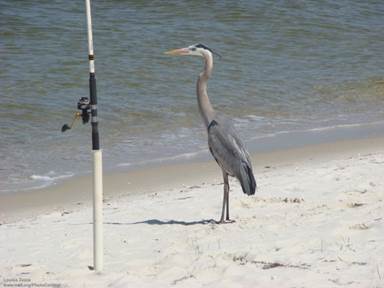
Great blue heron on the Florida coast. Photo donated by National Wildlife Photo Contest entrant Louisa Zezza.
Chances are while casting a line from the shoreline or wading in the surf with a rod you’ll also be able to watch the amazing fishing skills of species like great blue heron, brown pelicans, or osprey.  Surf fishing doesn’t require a lot of equipment and can be done from sandy and rocky beaches, rock jetties or even fishing piers.
 
Hitting the Beach
Ghost crab at Longboat Key, Florida. Photo donated by National Wildlife Photo Contest entrant Sally Goshen.
Wildlife enthusiasts gather every summer at Padre Island National Seashore to watch newly hatched endangered Kemps ridley sea turtles scramble to the sea. Others congregate on the sandy beaches of Cape May National Wildlife Refuge in late May to watch the natural spectacle of horseshoe crabs and thousands of shorebirds.  Any visit to a beach can include a connection to wildlife, from reef snorkeling to relaxing on a beach towel and watching a crab digging its hole in the sand.
 
River Fishing
Rainbow trout caught in Bighorn River. Photo donated by National Wildlife Photo Contest entrant Guy Tillet.
Nature provides families unique bonding opportunities while playing in America’s iconic waterways, like the fishing trip NWF Photo Contest entrant Guy Tillet takes with his family every year.  “Our family has an annual trip to the Bighorn River (Ft. Smith, Montana) each fall. Our practice is totally catch and release and that is the common practice on this river. We generally have very good luck on Rainbows and Brown Trout.”
Kayaking, fishing, visiting the beach and many more outdoor activities are only possible if we protect clean water! This past May, the Clean Water Rule that restores protections to vulnerable waters was finalized by the Obama administration after years of planning, 400 stakeholder meetings, and more than a million public comments calling for the protection of our drinking water and wildlife habitat. A new poll shows broad support for the Clean Water Rule, but some members of Congress are lining up to block or undo this wildlife-friendly policy.
A new nationwide bipartisan survey shows four-in-five, or 83% of sportsmen and women support the Clean Water Rule. The poll also reported 82% of sportsmen and women believe we CAN protect our water quality and have a strong economy with good jobs at the same time, without having to choose one over the other. That means, we don’t have to choose between ensuring economic prosperity and healthy waterways. Small business, outdoor recreation, and tourism depend on our nation’s waterways to thrive economically.  This new survey is key to informing members of Congress and local decision-makers of the broad support for the Clean Water Rule.