Monday, March 9, 2015

Water Matters Day at Tree Tops Park this Saturday, March 14th.

 
The event is at Tree Tops Park – 3900 SW 100th Avenue, Davie
 
“A Decade of Difference” is the theme of the 10th Annual Broward Water Matters Day event to be celebrated on Saturday, March 10, at Tree Tops Park, 3900 S.W. 100 Ave., Davie.
 
Water Matters Day is Broward County's signature water conservation event where residents can learn about our local and regional water resources, how water is managed and how we are planning for the future. Residents will receive tips on water conservation, find out about rebates and incentives for upgrading to water-conserving devices and learn how to create “Florida friendly” and drought tolerant landscape.

In addition to learning how to save water and money, participants can leave with free native plants or trees just for learning how to do the right thing. To be eligible, attendees will need to visit at least 12 of the event's exhibits and obtain 12 stamps. Approximately 40 educational exhibits and booths will be on display to help residents learn about water conservation techniques, smart irrigation, native landscaping and what role they play in protecting and conserving our water supplies.

Other activities include face painting, a caricature artist and crafts for children; rain barrel workshops; the music of environmental folk singer Grant Livingston; and a variety of giveaways and raffles. One lucky raffle winner will win an irrigation system upgrade (installation not included), courtesy of Rainbird. Activities will begin at 9 a.m. and run through 3 p.m. In conjunction with this year’s event there will also be a free electronics recycling drop off available.

The Broward County Board of County Commissioners, Broward Workshop, School Board of Broward County, and South Florida Water Management District are partnering to present this event. Co-sponsors include the Town of Davie, City of Cooper City, City of Coconut Creek, City of Fort Lauderdale, City of Hollywood, Town of Southwest Ranches, Central Broward Water Control District, South Broward Drainage District, Old Plantation Water Control District, AECOM, Carollo Engineers, and Rainbird.

Admission to Water Matters Day is free, but the park's weekend and holiday admission fee of $1.50 per person will be in effect. Children aged 5 and under are free. For more information on Water Matters Day or water conservation, visit broward.org/watermatters.


Friday, March 6, 2015

Annual Waterway Cleanup tomorrow!

Join us Saturday, March 7th, 2015  from 9 a.m. – 1 p.m. for the 38th Annual Waterway Cleanup!
The Annual Waterway Cleanup is the county's largest and longest-running environmental event. In 2014, nearly 1,700 volunteers of all ages by land and 70 boats worked at 30 locations across the county to remove 17.9 tons of trash and debris from our waterways, rivers and canals. You do not need a boat to participate!
 
2015 Cleanup Sites
Scroll down to locate the cleanup site closest to your neighborhood! Registration will be available online until noon on Friday, March 6. After that time, volunteers will be able to register at the site they will be participating at. Volunteers are encouraged to register by Friday at noon if possible.
North Broward
Riverside Park – RSVP Now!
205 Coral Ridge Drive, Coral Springs
(Boat Ramp Access)
Pioneer Park – RSVP Now!
249 NE 5th Ave., Deerfield Beach
(Boat Ramp Access)
Deerfield Island Park – RSVP Now!
1720 Deerfield Island Park, Deerfield Beach, FL
(Boat Ramp Access)
Sullivan Park – RSVP Now!
Riverview Road, Deerfield Beach, FL  33441
Alsdorf Park – RSVP Now!
2850 NE 14th St. Causeway, Pompano Beach, Fl
(Boat Ramp Access)
South Broward
Dania Beach Cleanup – RSVP Now!
100 Beach Road (at the pier), Dania Beach
(Land & Water Access)
Derecktor of Florida – RSVP Now!
775 Taylor Lane, Dania Beach
(Land & Water Access)
Harbour Towne Marina – RSVP Now!
801 NE 3rd St., Dania Beach
(Boat Ramp Access)
John U. Lloyd State Park (Whiskey Creek)- RSVP Now!
6503 N Ocean Dr., Dania Beach
(Boat Ramp Access)
Bonnet House – RSVP Now!
900 North Birch Road, Fort Lauderdale, Fl
(Land Access)
Bill Keith Preserve – RSVP Now!
1720 SW 17th St., Fort Lauderdale
(Land Access)
Cooley's Landing – RSVP Now!
450 SW 7th Ave., Fort Lauderdale
(Boat Ramp Access)
Delevoe Park- RSVP Now!
2520 NW 6th St., Fort Lauderdale, FL  33311
George English Park – RSVP Now!
1101 Bayview Drive, Fort Lauderdale
(Land & Water Access)
Hugh Taylor Birch State Park – RSVP Now!
3109 E Sunrise Blvd., Fort Lauderdale
(Land Access Only)
Lauderdale Isles Yacht Club – RSVP Now!
2637 Whale Harbor Lane, Fort Lauderdale
(Boat Ramp Access)
Beverly Heights/Himarshee Canal – RSVP Now!
1109 SE 2nd St., Fort Lauderdale, FL 33301
Lauderdale Small Boat Club – RSVP Now!
1740 SW 42nd St., Fort Lauderdale
(Land & Water Access)
Secret Woods – RSVP Now!
2701 W. State Road 84, Fort Lauderdale
(Land Access Only)
Hallandale Beach City Marina- RSVP Now!
101 Three Islands Blvd, Hallandale Beach, FL. 33009
(Water/Boat Access Only)
Hallandale Beach North City Beach- RSVP Now!
2801 E. Hallandale Beach Blvd (located at A1A and E. Hallandale Beach Blvd, Hallandale Beach, FL. 33009
(Land Access Only)
‎Anne Kolb Nature Center at West Lake Park- RSVP Now!
751 Sheridan St., Hollywood
(Land Access Only)
City of Hollywood- Holland Park- RSVP Now!
801 Johnson Street, Hollywood
(Boat Ramp Access)
City of Hollywood- Rotary Park- RSVP Now!
3150 Taft Street, Hollywood
(Land Access)
City of Hollywood Marina- RSVP Now!
700 Polk Street, Hollywood
(Water Access)
City of Oakland Park – RSVP Now!
2900 NE 12th Terrace, Oakland Park
(Boat Ramp Access)
Plantation Isles – Pop Travers Park-  RSVP Now!
6600 SW 16th St., Plantation
(Land & Water Access)
Markham Park – RSVP Now!
16001 W. State Rd 84, Sunrise, FL 33326
(Land Access)
City of Wilton Manors – Colohatchee Park- RSVP Now!
1975 NE 15th Ave., Wilton Manors
(Boat Ramp Access)
Cliff Berry Floating Work Boat- Private Business Site


Friday Funny

Thursday, March 5, 2015

Where’s the best place to plant my tree?

From our Save-A-Tree, Plant-A-Tree Program:
 
When deciding the location to plant your tree here are a few things you need to consider:
 
  1. The tree you received is currently too small to plant on your swale (area of right-of-way between sidewalk and street) so it should be planted on your private property. 
  2. Know how big your tree will get.  Check the flyer you received or go to http://www.fortlauderdale.gov/saveatree/index.htm to find out. 
  3. Plan for future growth.  Planting your tree in the right place will reduce maintenance and a number of problems for years to come.  These are recommended distances from your house, pool, underground utilities, sidewalks and other improvements:
    1. 8 feet for Small growing trees
    2. 15 feet for Medium growing trees
    3. 20 feet for Large growing trees 
    4. See the diagram below on placement around overhead utility lines.
 
 
  1. Trees can save you money on your energy bill.  Trees should be placed on the south, west, and east sides of your house to provide the best shade. 
  2. The tree you received needs full sun for best growth.  Don't place these trees in the shade of other trees. 
  3. Call Before You Dig – What you can't see can hurt you, so before you reach for a shovel, reach for the phone. Did you know that a free call to Sunshine 811 will start the process of getting underground utility lines marked? Simply dial 811 at least two full business days before you plan to start digging and a representative will come out to your house or business and clearly mark the location of all underground utilities. This is a free service. You can also submit your request online at www.Sunshine811.com.
  4. For more information:
    1. http://www.fortlauderdale.gov/saveatree/index.htm
    2. http://fyn.ifas.ufl.edu/FFL/right-plant-right-place.html
    3. http://www.arborday.org/trees/righttreeandplace/
    4. http://www.fpl.com/residential/trees/right_tree_right_place.shtml
    5. http://www.itreetools.org/design.php


Wednesday, March 4, 2015

Wildlife Wednesday - Finding Subirdia

 
By John Marzluff
 
When many of us think about nature,we imagine a pristine preserve far from the city center, not the partially paved places where most of us live and work. But John Marzluff, a University of Washington professor and ornithologist, has come to a surprising realization: Suburbs are bustling with bird diversity, sometimes even surpassing that of forests. In an excerpt from his new book, Welcome to Subirdia, Marzluff presents 10 ways you can help the birds in and around your own backyard, and connect with nature in your daily life.
 
My research and that of other urban ecologists suggest that, despite the great loss of biodiversity caused by our actions, we also have a lot to celebrate. I’ve spent most of my spring and summer mornings counting birds in national parks, industrial parks and suburbs. It is not surprising that the most-heavily paved portions of the city hold few birds, but it is not the case that the least-disturbed places on Earth always hold the most birds. Wild reserves provide shelter for unique birds not found in the city, and they are absolutely essential. But the greatest variety of birds is often found in the suburbs.
 
With my graduate students I have counted birds from Seattle’s urban core to its fringing forests nearly every spring and summer morning for the past decade. We expected the suburbs between the city center and the forested reserves to support an intermediate number of species, but when we listened as these neighborhoods awoke each morning, we were astonished by the dawn chorus of thrushes, tanagers, wrens, towhees, finches, crows and woodpeckers. Here we often tallied 30 or more species in a single count. We found birds from the industrial city mixed with some from the protected forest, and we encountered a whole new set of birds that use more open country.
 
 We had discovered “subirdia.”
 
Human neighborhoods are good for birds because they offer a wide range of habitats in a small area. Lawns and trees are jumbled into savannahs, fields and woodlots. Engineers provide new features such as small ponds that retain runoff from the many sealed surfaces. Where different habitats touch, they produce rich edges that offer access to many resources, such as nuts from trees, seeds from annual weeds and insects from ponds. The diversity of plants found together in urban settings is simply incredible.
 
Our discovery of subirdia in Seattle is not unique. Throughout Britain, in deciduous woodlands of California and Ohio, grasslands of Arizona, forests of Japan, and shrublands of Australia, moderate levels of urbanization also provide an abundance of various resources that increases the number of bird species beyond that found in either wilder or more densely populated settings.

Subirdia is the place many of us call home or work.
 
Physically, it is a richly interwoven mixture of residential, commercial and wilder land. Houses, allotments and gardens, derelict and vacant land, golf courses and other outdoor sports sites, cemeteries, schoolyards, highway and railway verges, municipal utility stations, business parks and shopping centers occur among places dominated by natural vegetation such as greenways, river and stream corridors, parks and nature reserves, pipelines and power lines, steep slopes and quarries. In a variety of locales, natural vegetation constitutes one-third to two-thirds of subirdia. Functionally, subirdia is the confluence between city and country that promotes a mutual exchange of plants and animals. It is also a place where people from urban and rural cultures come together as neighbors, friends and acquaintances. In so doing, we learn how varied is the human perception of nature.
 
As our modification of the land combines birds into new communities, we create interactions that have never before been seen and rekindle others that played out long ago. The interactive strands that link subirdia’s birds into an ecological web are as varied as the myriad animals that reside there. Some strands in the web are deadly, but others are supportive. As we now more fully consider a variety of ecological interactions, we learn about each bird’s place in the web of life and begin to see ourselves in that web as well. 
 
Birds and other species will benefit when landowners think of property as a community, not just a commodity, says Marzluff.
 
1. Do not covet your neighbor’s lawn. 
Landowners can increase bird use of their turf by reducing its extent, mowing it less often, and skipping the fertilizers and pesticides. Providing shrubs and trees, especially native species, increases food resources. Thickets, brush piles, rocks, standing dead trees and logs contribute cover from predators and safe nest and roost sites.
 
2. Keep your cat indoors. 
Our favorite felines are called “house cats” for a reason. Free-ranging cats kill one in 10 wild birds. Plus, living inside extends the average cat’s life by a decade. 
 
3. Make windows visible to birds.
Collision is the second most deadly and preventable threat for urban birds. Obscuring just 5 percent of a large window with artistic etching, frosting or simple striping can help. Or use decals that reflect ultraviolet light, visible to birds but not humans.
4. Do not light the night sky. 
Use light only when necessary and from as dim a source as possible. Bright bluish light is the most disruptive, soft yellow the least. Face outside lighting downward, not skyward, and especially avoid illumination that shines horizontally. 


5. Provide food, water and nest sites. Most birds that use feeders prefer black oil sunflower and white proso millet seed. In urban settings, birds also benefit from the provision of nest boxes. But preserving dead trees or limbs is the best way to ensure a steady supply of cavities for the species that require them. 
 
6. Do not kill native predators. 
Subirdia needs the natural checks and balances that predators such as hawks and owls provide. Exercise restraint when applying pesticides. The toxins we use to control insects and rodents are deadly to small birds and mammals.
 
7. Foster a diversity of habitats. 
Promote natural variability within and around backyard landscapes. Many native plants could be retained if we carved lots carefully from existing vegetation, rather than scraping entire lots bare and replanting them with a standard mix of nursery stock. 
 
8. Make roads safer for wildlife. Creating crossings for reptiles, amphibians and mammals increases biological diversity, which is good for subirdia. Enable natural grasses and shrubs to fill in along road verges and medians, and limit roadside mowing of these sites during nesting season.
 
9. Ask local planning authorities to ensure functional connections between land and water. These might include buffers along waterways, vegetated corridors, golf courses or a series of small parks strung together along an abandoned transportation route. 
 
10. Enjoy and bond with naturewhere you live, work and play! When humans live in the city and nature lives only in distant reserves, we can suffer what has been called “environmental amnesia.” To remember what biodiversity is and why it is important, we must also conserve nature in urban settings.


Tuesday, March 3, 2015

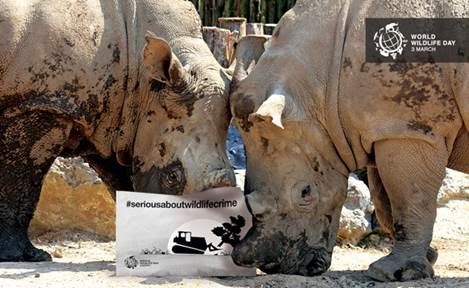
Today is World Wildlife Day

I know it’s not Wednesday but March 3 is World Wildlife Day and the message for today highlights getting serious about wildlife crime.  For more information go to http://www.wildlifeday.org/  :
 
 
CITES 2015 Message on World Wildlife Day
 
Wildlife is now firmly fixed on the United Nations calendar thanks to its own special day. 
 
On the 3rd of March 2014 the United Nations Secretary-General Ban Ki-moon led the global celebrations of the first World Wildlife Day and called for us to work for a future where people and wildlife coexist in harmony. 
 
This year, countries, United Nations and international organizations, as well as citizen’s groups from across the globe, have rallied around the theme ‘It’s time to get serious about wildlife crime’.
 
Illegal wildlife trade is threatening the survival of some of our most charismatic species, as well as some plants and animals you may have never heard of.  And it threatens people, their livelihoods, their safety and security.
 
The situation is serious. We must tackle the poaching, transport and consumption of illegally traded wildlife and in so doing use the same sorts of enforcement tools, techniques and penalties used to combat other serious crimes, such as trafficking in drugs or persons.
 
As we celebrate the beauty and variety of our wildlife let’s do whatever we can – as citizens and as consumers – to bring this illegal trade to an end and secure a sustainable future for wild animals and plants, as well as for ourselves.
 
We know what needs to be done – and by working together we will succeed.
 
Let’s all mark this special World Wildlife Day by getting serious about wildlife crime!
 
John E. Scanlon, Secretary-General of CITES


UN Secretary-General Ban Ki-moon’s message for 2015 World Wildlife Day
IT’S TIME TO GET SERIOUS ABOUT WILDLIFE CRIME.
Following is UN Secretary-General Ban Ki-moon’s message for World Wildlife Day, to be observed on 3 March:
The United Nations General Assembly has proclaimed 3 March – the anniversary of the adoption of the Convention on International Trade in Endangered Species of Wild Fauna and Flora (CITES) – as World Wildlife Day.  On this second observance of the Day, the UN system, its Member States and a wide range of partners from around the world are highlighting the simple yet firm message that “It’s time to get serious about wildlife crime”.
Illegal trade in wildlife has become a sophisticated transnational form of crime, comparable to other pernicious examples, such as trafficking of drugs, humans, counterfeit items and oil.  It is driven by rising demand, and is often facilitated by corruption and weak governance.  There is strong evidence of the increased involvement of organized crime networks and non-Stated armed groups.
Illegal wildlife trade undermines the rule of law and threatens national security; it degrades ecosystems and is a major obstacle to the efforts of rural communities and indigenous peoples striving to sustainably manage their natural resources.  Combatting this crime is not only essential for conservation efforts and sustainable development, it will contribute to achieving peace and security in troubled regions where conflicts are fuelled by these illegal activities.
Getting serious about wildlife crime means enrolling the support of all sections of society involved in the production and consumption of wildlife products, which are widely used as medicines, food, building materials, furniture, cosmetics, clothing and accessories.  Law enforcement efforts must be supported by the wider community.  Businesses and the general public in all countries can play a major role by, for example, refusing to buy or auction illegal ivory and rhinoceros horn, and insisting that products from the world’s oceans and tropical forests have been legally obtained and sustainably sourced. 
On this World Wildlife Day, I urge all consumers, suppliers and governments to treat crimes against wildlife as a threat to our sustainable future.  It’s time to get serious about wildlife crime.
United Nations Secretary-General Ban Ki-moon


Monday, March 2, 2015

Still Doubting that Organics are the Future?


3p Contributor | Monday March 2nd, 2015
 
By Tim Sparke
The words ‘organic’ and ‘sustainability’ are bandied around quite a bit. While some won’t eat anything but organic, others deny that there’s any future in organic farming. After all, with a population that’s seven billion-strong and growing, how can we possibly expect organics to feed the world? Or so the critics ask. In their view, feeding the masses simply can’t be done without strong chemicals and genetic modification.

However, organic farming has far more capacity than many people imagine. It goes way, way beyond growing a few tomato plants on your back verandah. Besides, if we want to live on a clean, healthy planet, going organic is the only way forward – not only for gardeners and farmers, but also for all businesses related to agriculture, from your local cafĂ© to your nearest supermarket, from your preferred beautician to your favorite clothing boutique. In fact, when you think about just how many industries depend on agriculture, it’s clear that a shift towards sustainable, chemical-free practices is essential.
Worker and consumer health
The first and most pressing argument for organics is human health. Current intensive agricultural practices expose people — especially farmworkers — to toxic pesticides.  In 2002, a Californian study revealed that, between 1997 and 2000, an average of 475 farmworkers suffered pesticide poisoning annually.  As the study suggests, the total figure was probably much higher, given that many cases go unreported each year. What’s more? Increasingly, studies are demonstrating links between pesticides and cancer, as well as disruption of the endocrine system.
Meanwhile, those at the other end of organic farming – consumers – also face health risks. Food grown using intensive techniques can contain pesticide residues, which consumers ingest when they eat. Plus, some studies show that organic products are  more nutritious than their conventionally farmed counterparts. For example, a study (PDF) conducted by the (admittedly biased) Organic Center showed that organic food performs much better when it comes to antioxidant power, polyphenol levels and flavonoid levels. And the same goes for animal products. Dairy products from animals raised on organic farms, which haven’t been fed antibiotics, tend to be higher in antioxidants and omega-3.
Environmental health
If we’re serious about keeping our planet healthy, and make it available for future generations, there’s no way that we can continue to support intensive agriculture. When pesticides and other strong chemicals are sprayed on our crops, they end up not only in our soil, but also in our waterways. Over time, this causes our soil to become severely depleted of nutrients, and eventually completely unable to support life. For our waterways, it can mean extreme pollution. Given that we rely on our rivers for our very survival, there’s no question that our future depends on us turning to organic farming.
But can organic farming produce enough food and materials?
Some people believe that organic strategies are only suitable for private or small-scale farming. But numerous studies have illustrated that organic strategies can produce just as much output – if not more – than regular methods. For example, back in 1989, the U.S. National Research Council studied eight organic farms across the United States – from an Ohio-based farm of 400 acres specializing in grain and livestock, to a California-based farm where 1,400 acres of grapes were growing. When compared with nearby farms, where intensive practices were being exercised, the organic farms yielded just as much, if not more, produce on average.
Economics
Finally, one argument often put forward in favor of conventional methods is economics. Supporters of the status quo believe that intensive farming is superior because it means we can produce plenty of food at much cheaper rates than organics can. But this is an exceptionally short-sighted view. For a start, the amount of disease being caused by the chemicals in the environment is already weighing on our health system – and this is only going to become a more and more expensive problem.
Secondly, the more organics are used, the cheaper they’ll become. Running an organic farm actually requires less expensive equipment and chemicals than a conventional one does – plus, once organics become more widespread, operating costs will decrease significantly.
The future
So, if we want to assure ourselves of a happy, healthy, safe future, the only way forward is organics. By reducing the number and intensity of toxic chemicals in our world, we can look forward to living in a planet where disease is reduced and our environment stays pristine for generations to come.
Tim Sparke is the CEO at 4pumps and for several years, he has been an active advocate of organic farming and sustainability. He also has a passion for writing and he writes the blog at 4pumps.
 
Image credit: Pixa Bay